
© 2025 Peril Mavens LLC. All rights reserved.
NAICS CODE: 541690, 541611, 611430We advise at two levels of risk and safety, because needs vary by organization, but the best results come when they work together. Some employers need immediate field support, others need to strengthen the systems and accountability that sit above the work.
.svg)
.svg)
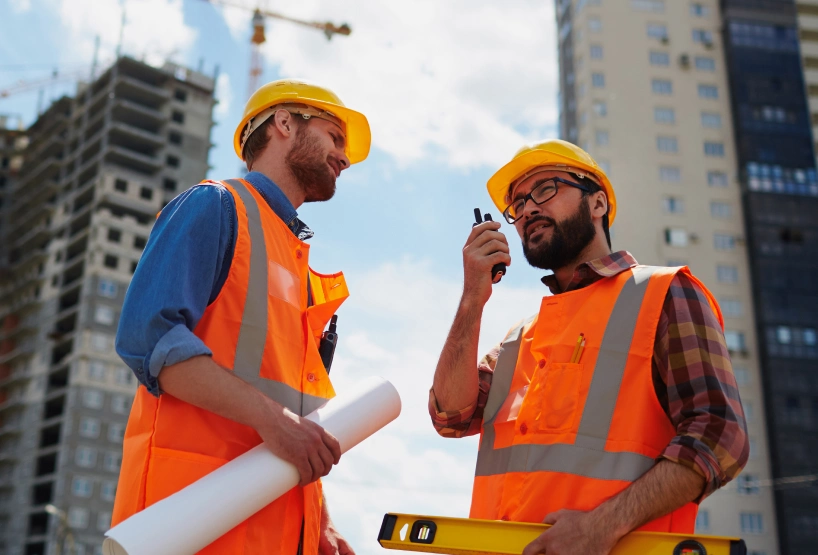
Micro-level advisory focuses on day-to-day work as it actually happens. It’s about visibility and control at the task and crew level. We help you conduct structured onsite safety observations and walk-throughs, track behaviors and conditions in real time, identify patterns in work practices, supervision, and site conditions that create risk and provide clear, practical feedback your internal teams and supervisors can act on quickly.
.webp)
Macro-level advisory looks at the broader system around the work programs, structure, and management behavior. We help you review and strengthen safety and risk programs, procedures, and standards. Evaluate management accountability: who owns what, how expectations are set, and how follow-through happens. Align roles, reporting lines, and communication so risk information actually moves.
.webp)
When both levels are in sync, risk management stops being a set of isolated activities and becomes a real operating advantage. Micro-level insight exposes the precise behaviors, conditions, and patterns that create risk, while macro-level systems, accountability, and governance hardwire better decisions into how the organization runs. Together, they create a tight feedback loop.
A national fire protection company engaged us after a service technician was injured while climbing out of a confined space at a customer facility.
The technician typically worked alone, traveling site to site as a one‑person team. At the micro level, the investigation highlighted several immediate issues: the technician did not have the proper ladder, was not fully using the required PPE, and no air testing or lockout/tagout had been performed, even though mechanical equipment and stored energy were present in the space. The team could not agree on whether the space was permit‑required or not, and the incident quickly turned into internal conflict instead of clarity.
Often Times The Obvious
When we stepped back to look at the macro level, a more fundamental problem emerged. The company’s written confined space SOPs were largely aligned with regulatory requirements and clearly stated that permit‑required confined space work should involve a minimum of two, preferably three, people. Yet in practice, service technicians were routinely dispatched as lone workers to spaces that could easily meet permit‑required criteria. In other words, even if this technician had perfect PPE and the right ladder, he was structurally set up to fail.
The Bigger Picture - Anchor
By connecting both levels, we helped them see that the issue wasn’t just field execution, it was also how the work was organized and staffed. Together, we identified changes such as evaluating spaces before dispatch, assigning two‑ or three‑person teams for higher‑risk work, and engaging facility personnel in rescue and emergency communication protocols where appropriate. The result was a safer, more defensible approach where lone worker exposure in and around confined spaces was no longer treated as business as usual, and the written program and real‑world practice finally matched.
Where Sustainability Lives