Home › Construction
Construction risk intelligence

From field findings to decisions leadership can stand behind.

Most safety reports stop at the finding. We structure what the field sees into evidence, show where exposure actually concentrates across crews, trades, and sites, and put clear decisions in front of your safety lead and leadership. Remote, hybrid, or boots on the ground, we work beside your safety lead, not in place of them.

How we deliver

Three ways in. One intelligence loop.

Pick the field footprint the work needs. The analysis, the evidence, and the decisions behind it are the same in every mode. Select a mode to see how it runs.
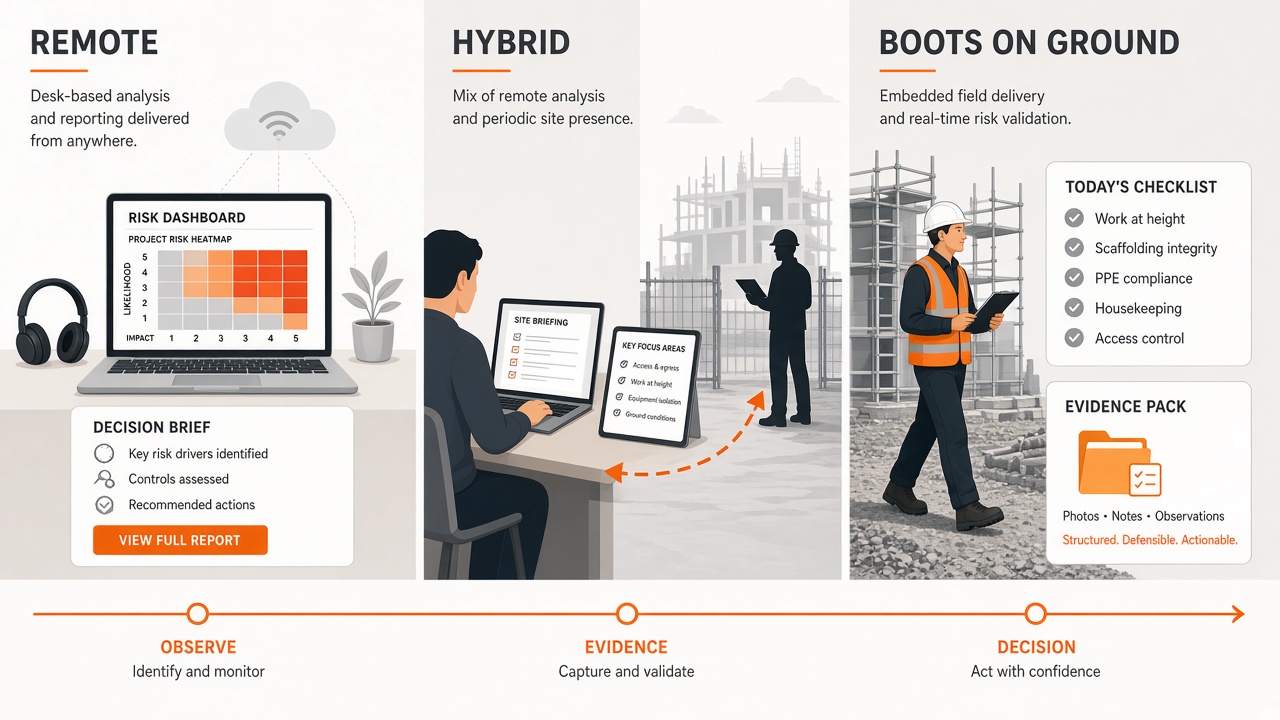
Three delivery modes. Remote: desk-based analysis with a risk dashboard and decision brief. Hybrid: remote analysis with periodic site presence, information flowing desk to field. Boots on ground: embedded field professional with a daily checklist and evidence pack. A timeline beneath runs Observe, Evidence, Decision.
Illustration · delivery modesEvery mode runs Observe → Evidence → Decision. Only the field footprint changes.
The difference

Presence is an input. Intelligence is the deliverable.

Most field coverage shows up, walks the job, closes the punch list, goes home, and repeats it tomorrow. Same hours on site. The difference is what's left when the shift ends. Step through a week.

Day 1 of 5 Example illustration · not a client case

Typical boots on ground

Presence only
Show upWalk the jobPunch listGo home
↺ repeat tomorrow

8hours on site
0deliverables that carry forward

Peril Mavens

Presence + intelligence
Findings structured: site, trade, source, severityDay 1
Pattern across crews and sitesDay 2
Concentration & trend, severity-weightedDay 3
Decision brief drafted with your safety leadDay 4
Action owner register: owners, dates, re-measureDay 5

8hours on site
1deliverables that carry forward

Boots on the ground feed the intelligence loop. They don't replace it.

Behind the work

What runs in the background.

Whatever the mode, the same analytics turn raw findings into decisions leadership can stand behind. This is the part a site walk alone never delivers.

Information is the currency of safety.

Safety runs on what leadership can see in time.

Safety isn’t bought with more equipment, more rules, or a bigger budget alone. It’s earned when accurate information reaches the people who can act, on time. Lagging rates tell you what already happened; leading indicators and a clear view of where exposure concentrates tell you what to change next. Pencil-whipped forms close the finding. They don’t move the risk.

01Structure findingsOne taxonomy: site, trade, source, potential severity.
02Concentration & trendWhere it clusters and which way it's moving.
03Severity-weighted viewFrequency is not risk. SIF potential called out.
04Decision briefOptions, an owner, a date, and the measure we re-check.
Example illustration · 6 sites · 10 weeks
LowHigh concentrationSIF serious-injury or fatality potential

What you walk away with: decision documents, not a binder.

01 · Risk briefTwo pages leadership will read.

Top exposures ranked by severity, the evidence behind each, and decision options with tradeoffs.

For: owner, ops leadership, safety lead
02 · Concentration reportWhere exposure actually sits.

Category × site or trade, frequency vs severity-weighted, trend lines, SIF items called out.

For: safety lead, project executives
03 · Action owner registerEvery decision has a name and a date.

Linked to the evidence that drove it. Closed when the exposure moves, not when a box is ticked.

For: safety lead, superintendents
FAQ

Before the scoping call.

Beside them. Your safety lead owns the program. We give them the structured evidence and decision options to take upward, and field coverage when executing those decisions needs it.
No. Remote work runs on the data you already collect. Hybrid adds scheduled visits at phases or milestones. Boots on ground embeds a professional for the phase. Scope picks the mode, and it can change as the project does.
What's left after the visit. Every walk feeds one structured dataset, so you get concentration, trend, a decision brief, and an action owner register, not just a daily log.
Thirty minutes on what you're seeing, what data you already have (inspection logs, observations, incident records), and which delivery mode fits. We don't publish a rate card; scope drives it.
Yes. Our advisors hold EM 385-1-1 and OSHA 30 credentials and support federal scopes, including SSHO coverage and APP/AHA readiness.
Building your next safety hire? The Mavens Bridge places mentored undergraduate fellows with host employers.Learn about the Bridge ›
Bring us your findings. We'll show you where the risk sits.